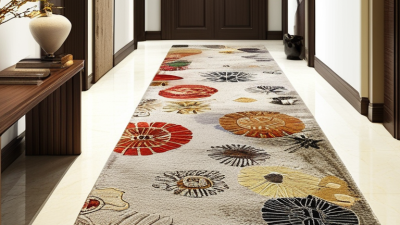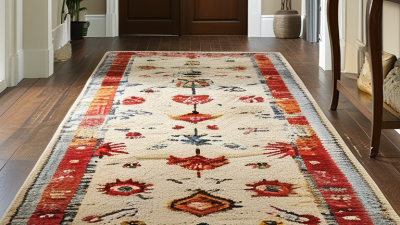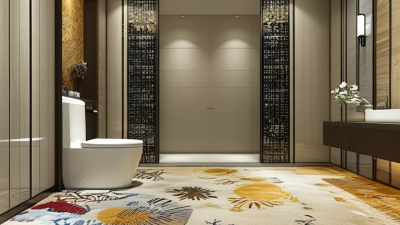
Choosing the China Best Hallway Carpet Manufacturer and Supplier requires more than comparing prices. A hallway faces constant footsteps, rolling luggage, cleaning chemicals, and changing daylight. The right carpet must survive these pressures while supporting the building’s visual identity.
Ray Anderson, the carpet-industry pioneer and Interface founder, once said, “The business of business is not just to make money, but to make the world a better place.” His words remain relevant when buyers assess recycled content, responsible production, and carpet replacement plans. A reliable Hallway Carpet supplier should explain fiber type, pile density, backing construction, fire performance, and stain resistance in clear language. Technical documents matter.
So do physical samples.
A practical evaluation should include solution-dyed nylon, durable polypropylene, or wool blends, depending on traffic and budget. Check the carpet under warm and cool lighting. Rub a sample with a damp cloth. Test its edges near doorways. These small actions reveal weaknesses that brochures may hide.
Manufacturers should also provide installation guidance, color consistency records, warranty terms, and realistic lead times. Ask about custom patterns, roll widths, minimum order quantities, and replacement batches. A low quotation may look clever at first. It can become expensive after poor cutting, curling edges, or delayed delivery.
No supplier is perfect. Some claims need verification. Buyers should review certifications and request references from completed commercial projects. Experience matters, but transparent communication matters more. This guide compares China-based hallway carpet manufacturers and suppliers through quality, customization, sustainability, service, and long-term value. The best choice is not merely attractive. It is dependable under daily use.
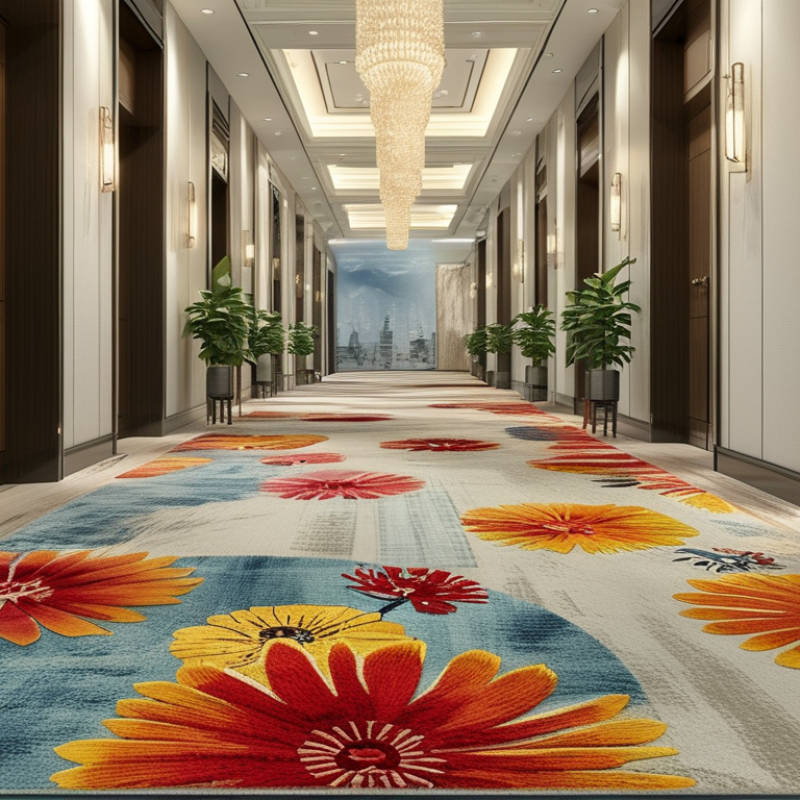
What Defines a High-Quality Hallway Carpet Manufacturer in China?
A high-quality hallway carpet manufacturer combines material expertise, controlled production, and verifiable testing. Grand View Research valued the global carpet and rugs market at about USD 72 billion in 2023, with continued growth expected through 2030. This growth increases supplier choice, but not necessarily supplier reliability. Experienced manufacturers should explain fiber type, pile density, backing structure, and suitable traffic ratings. For busy corridors, solution-dyed nylon or carefully engineered wool blends can improve abrasion resistance and color stability. Samples should show clean edges, even tufting, firm backing, and consistent dimensions.
Testing must be practical, not decorative. Manufacturers should provide batch records and reports from accredited laboratories. Relevant checks include abrasion, dimensional stability, flammability, colorfastness, and volatile emissions. ISO 9001-based quality systems can support process control, but certification alone proves little about every shipment. Ask for current inspection records. Ask again for the actual production batch.
Sustainability also needs evidence. The United Nations Environment Programme reports that buildings account for roughly 37% of global energy-related emissions, making durable interior materials increasingly important. A responsible supplier should discuss recycled content, product lifespan, offcut handling, and low-emission adhesives. Factory photographs help, but onsite or third-party audits are stronger. No manufacturer is perfect. Even a skilled factory may show shade variation between dye lots or delays during peak seasons. Honest communication, clear tolerances, and a written replacement policy often reveal more than polished sales language.
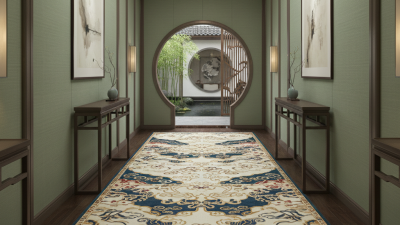
China Best Hallway Carpet Manufacturer and Supplier?
Commercial hallway carpet must withstand repeated footsteps, trolley wheels, dirt, and frequent cleaning. EN 1307 provides a practical framework for assessing textile floor coverings by intended use. For commercial areas, classes 31, 32, and 33 indicate moderate, general, and heavy traffic. Busy hotel corridors, schools, and office entrances often require Class 33. However, a higher class does not automatically guarantee better comfort or appearance.
ISO 2424 works differently. It defines technical terms for textile floor coverings, including pile, backing, yarn, and manufacturing structure. It helps buyers read specifications consistently. It is not a simple traffic-grade label. This distinction matters when comparing loop pile, cut pile, or hybrid hallway carpets. A technical sheet may sound impressive but still omit stain resistance, dimensional stability, or maintenance needs.
Look beyond the number.
In practical site reviews, hallway performance depends on more than EN 1307 classification. Entrance zones may need stronger soil control, while upper corridors may prioritize acoustics and underfoot comfort. Check pile density, backing stability, seam behavior, and cleaning compatibility. Ask for test evidence and installation guidance. I have seen specifications accepted too quickly, especially when “heavy duty” appears without clear test details. That wording needs examination. Carpet selection should match traffic patterns, rolling loads, moisture exposure, and the cleaning schedule rather than relying on one classification alone.
Hallways receive concentrated traffic, rolling carts, grit, and repeated turning. In this setting, 100% solution-dyed nylon offers a practical advantage. Its color pigment enters the polymer before extrusion, not only the fiber surface. Small scratches are less visible. Bleach-resistant construction can also support routine commercial cleaning, when the specification allows it.
Testing must support the claim. AATCC TM16.3 evaluates color change under xenon-arc light, while ISO 105-B02 uses a blue-wool reference scale. Strong products commonly target a lightfastness rating of 4 or higher. ASTM D5252’s hexapod drum test examines appearance after heavy simulated foot traffic, often using 12,000 cycles. These figures help buyers compare samples, but they are not a promise for every building.
Look closely at the hallway sample. After brushing, the pile should recover without exposing a pale base. Check tuft density, backing stability, seam behavior, and the manufacturer’s test report. Nylon improves resilience, but poor installation can still create ripples and premature wear. I would also request wet-cleaning and stain-removal results. Real corridors are messy. A clean laboratory result may not reflect sand, wet umbrellas, or sharp trolley turns. Supplier experience matters, yet transparent test methods matter more.
ASTM D5252 testing helps evaluate how carpet appearance changes under simulated foot traffic. The method uses a hexapod tumbler to create repeated, controlled mechanical action. Carpet samples are conditioned, measured, and placed inside the testing drum. The hexapod then moves across the surface for a specified number of cycles. Technicians compare the tested area with an untested reference. They examine crushing, matting, shading, and visible wear. Careful lighting matters. Small changes can affect the rating.
This test offers useful evidence for hallway carpet selection. Heavy-use corridors need fibers and constructions that resist pile distortion. However, ASTM D5252 does not measure every part of service life. It does not fully reproduce rolling carts, tracked-in grit, spills, or uneven cleaning. Real buildings are messier. A laboratory result can hide practical weaknesses. That limitation deserves attention.
Experienced manufacturers should connect test data with site conditions. They can review traffic frequency, entrance exposure, maintenance schedules, and carpet color. Dark shades may conceal soil but reveal crushing differently. Patterned surfaces can also disguise early wear. A strong report should identify the test cycles, specimen construction, rating method, and conditioning details. Claims should remain precise. “Traffic tested” is not the same as “wear proof.” Samples should be reviewed honestly, including areas that perform less well. That reflection supports more reliable purchasing decisions for commercial hallways.
Choosing a China hallway carpet supplier requires more than comparing catalogue prices. Lead time should be measured from approved artwork to packed goods, not from the first quotation. UNCTAD’s Review of Maritime Transport 2023 states that over 80% of global merchandise trade moves by sea. A delayed production slot can therefore affect both booking and delivery. Request a production schedule, port plan, and previous shipment records. Ask for real dates. Promises are not evidence.
MOQ also deserves careful testing. A low MOQ may hide higher unit costs, limited colors, or weaker production control. Compare three quantities, such as 100, 300, and 1,000 square meters, with packaging and inspection fees included. Quality control should follow a written inspection plan. ISO 2859-1 provides recognized sampling procedures for attribute inspections, including defect classification and sample sizes. Specify pile height, backing adhesion, color tolerance, edge finishing, and roll length. Send the same checklist to every supplier.
Useful evidence includes pre-shipment inspection reports, batch photographs, fiber composition records, and corrective-action logs. The World Bank’s 2023 Logistics Performance Index shows that customs, infrastructure, and shipment reliability remain separate logistics factors. That matters when a factory has good production speed but weak export coordination. I would not trust a perfect sample alone. One overlooked measurement can become hundreds of mismatched hallway rolls. Some buyers accept vague QC language, and that is a costly mistake.
| Supplier Metric | What to Measure | Practical Industry Benchmark | Documents or Evidence to Request | Risk Signals |
|---|---|---|---|---|
| Sample Lead Time | Time required to produce a standard sample or color sample after receiving the specification. | Typically 7–15 calendar days for standard materials; custom colors, patterns, or constructions may require 15–30 days. | Written sample schedule, approved sample record, material specification sheet, and courier tracking information. | Unclear sample deadlines, repeated changes to the promised date, or no approved reference sample before production. |
| Bulk Production Lead Time | Time from approved artwork, deposit, and raw-material confirmation to the completion of finished carpet. | Commonly 20–35 calendar days for repeat or standard products; 35–60 days may be reasonable for custom designs, special yarns, or large orders. | Production schedule, manufacturing milestones, raw-material availability confirmation, and pre-shipment inspection date. | The lead time starts before design approval is clearly defined, or the supplier cannot separate production time from shipping time. |
| On-Time Delivery Rate | Percentage of shipments delivered by the contractually agreed date over a defined period. | A well-controlled supplier should be able to demonstrate approximately 90% or higher on-time performance, subject to agreed tolerances and external disruptions. | Redacted delivery performance reports, shipment records, purchase-order history, and corrective-action records. | Only verbal performance claims, no historical records, or frequent excuses without documented corrective actions. |
| Minimum Order Quantity (MOQ) | Smallest order quantity accepted for standard products, custom colors, and custom patterns. | Standard stock products may be available from approximately 50–200 m²; custom colors or patterns often start around 300–1,000 m², depending on construction and raw-material requirements. | MOQ sheet by product type, setup-cost policy, stock availability, and written confirmation of whether MOQ applies per color or per total order. | One MOQ is quoted for all products, setup charges are not disclosed, or the supplier cannot explain the effect of order quantity on price. |
| MOQ Flexibility | Ability to support a trial order, mixed colors, mixed sizes, or phased purchasing. | A flexible supplier may offer a paid trial order, mixed-color consolidation, or a reduced MOQ with a setup fee for the first order. | Trial-order quotation, mixed-load policy, setup-fee schedule, and written approval of permitted color or size combinations. | The supplier accepts a small order informally but later changes the price, delivery date, or product specification. |
| Quality Management System | Whether production is controlled through documented procedures, inspection points, traceability, and corrective actions. | A documented quality system aligned with ISO 9001 principles is a useful baseline, but certification should be verified and should not replace product inspection. | Current certificate scope, certificate verification details, quality manual summary, inspection procedures, and nonconformity records. | An expired certificate, a certificate covering a different facility, or no documented process for handling defective goods. |
| Incoming Material Inspection | Inspection of yarn, backing, dyes, adhesives, packaging, and other materials before production. | Materials should be checked against purchase specifications, color standards, lot numbers, and supplier documentation before release to production. | Incoming inspection checklist, batch records, yarn or fiber specifications, and material traceability records. | Raw materials are used immediately without lot identification, inspection records, or approved specifications. |
| In-Process Inspection | Controls applied during tufting, weaving, printing, cutting, edging, backing, and finishing. | Critical dimensions, pattern alignment, surface appearance, pile or fiber condition, backing adhesion, and edge quality should be checked during production. | In-process inspection forms, first-piece approval, production photos, and records showing corrective action. | Inspection occurs only after packing, or there is no first-piece approval for custom hallway carpet. |
| Final Inspection Standard | Acceptance criteria for appearance, dimensions, quantity, packaging, labeling, and functional requirements. | Use a written inspection plan with measurable tolerances. For visual or workmanship defects, AQL sampling may be agreed; AQL 2.5 for major defects and AQL 4.0 for minor defects are commonly used commercial reference levels, not universal legal requirements. | Inspection plan, sampling level, defect classification, measurement tolerances, inspection report, and approved golden sample. | “Good quality” is the only acceptance criterion, or the supplier refuses independent pre-shipment inspection. |
| Dimensional Accuracy | Consistency of length, width, thickness, pile height, repeat pattern, and squareness. | Tolerance should be agreed in the purchase contract; many projects use approximately ±1% for overall dimensions, subject to product construction and installation requirements. | Approved technical drawing, measurement report, calibration records, and batch inspection results. | No written tolerance, inconsistent roll or tile dimensions, or visible pattern drift between production lots. |
| Color Consistency | Color matching within a production batch and between different batches. | Use an approved physical standard or measured color tolerance. Production should be controlled by dye lot, yarn lot, or printed-batch identification. | Signed color standard, lab-dip approval, spectrophotometer records where applicable, and batch labels. | Approval is based only on screen images, lighting conditions are not specified, or different dye lots are mixed without approval. |
| Performance Testing | Suitability for hallway traffic, including wear, colorfastness, flammability, and backing performance. | Testing should match the destination market and project specification. Relevant tests may include abrasion or wear, colorfastness to light and rubbing, dimensional stability, slip performance, and applicable fire requirements. | Laboratory test reports, test-method references, sample identification, test date, and evidence that the tested construction matches the offered product. | Generic reports are supplied without product identification, tests are outdated, or the test method does not match the destination market. |
| Packaging and Export Readiness | Protection against moisture, compression, deformation, contamination, and handling damage during international transport. | Carpet should be packed according to its construction and transport method, with moisture protection, product labels, roll or carton identification, and packing-list accuracy. | Packing specification, carton or roll markings, loading photos, packing list, and moisture-control procedure. | No packaging standard, unclear roll direction, missing lot labels, or packaging that cannot protect the product during ocean freight. |
| Corrective Action Response | Speed and effectiveness of the supplier’s response to defects, shortages, or delivery problems. | Initial acknowledgment within 1–2 business days and a documented root-cause and corrective-action plan within approximately 5–10 business days is a practical service target. | Corrective-action report, root-cause analysis, replacement or credit policy, and evidence of preventive action. | The supplier only offers an apology, disputes documented defects without investigation, or repeatedly repeats the same problem. |
Benchmark ranges are general procurement reference points. Final requirements should be confirmed in the purchase contract according to carpet construction, destination-market regulations, installation conditions, and project specifications.